


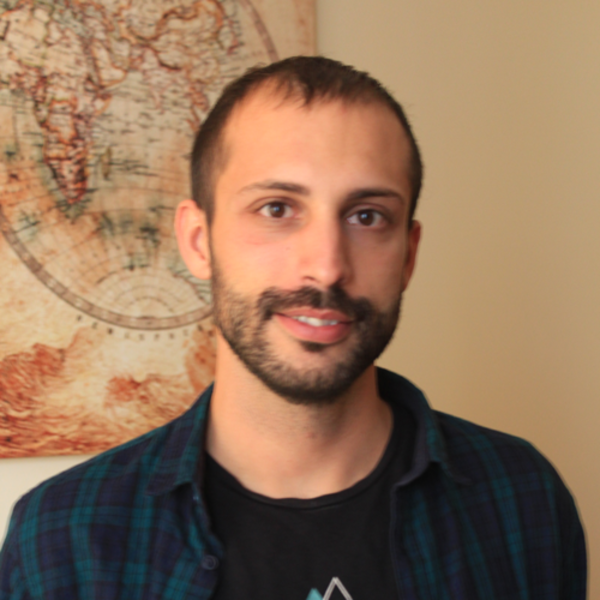
Jaime Nieto
(Valladolid, 1986)
Jaime has a degree in Economics from the Complutense University of Madrid. He has a Master’s degree in “Regional and Local Economic Development and Territorial Management” (Extraordinary Award) from the University of Valladolid. He holds a PhD in Economics from the University of Valladolid with the thesis “Modelling energy transitions to a low carbon economy” defended in 2020. He has participated in various European H2020 and national projects. His research focuses on the green economy and transitions towards low-carbon economies by combining Input-Output and system dynamics methodologies.
Contact
Mail: jaimenie@gmail.com
Academic publications
- Meng, W., Nieto, J., Guan, D., Meng, J., Sander, R., Poschl, U., Hubacek, K., Su, H., Tao, S., Cheng, Y. 2026. Rethinking energy transition strategies for the European Union amid rising energy prices. Proceedings of the National Academy of Sciences (PNAS), Vol. 123, No. 23, e2609606123. https://doi.org/10.1073/pnas.2609606123
- Aramendia, E., Nieto, J., Capellán-Pérez, I., Llases, L., de Blas, I., Lago Aurrekoetxea, R. M., Álvarez-Antelo, D., & Carpintero, Ó. 2026. Reducing material requirements while decarbonising the Spanish economy: From a green growth to a postgrowth paradigm. Progress in Energy, 8, 025003. https://doi.org/10.1088/2516-1083/ae4667
- Nieto, J., Brockway, P. E., Sakai, M., & Barrett, J. (2024). Assessing the energy and socio-macroeconomic impacts of the EV transition: A UK case study 2020–2050. Applied Energy, 370, 123367. https://doi.org/10.1016/j.apenergy.2024.123367
- Carpintero, Ó., Nieto, J., 2023. Economy as an open system, en Padilla Rosa, Emilio; Ramos-Martín, Jesús (eds.), Elgar Encyclopedia of Ecological Economics, Cheltenham, UK and Northampton, MA. USA: Edward Elgar, pp. 151-156.
- Carpintero, Ó., Nieto, J., 2023. Spaceship Earth, en Padilla Rosa, Emilio; Ramos-Martín, Jesús (eds.), Elgar Encyclopedia of Ecological Economics, Cheltenham, UK and Northampton, MA. USA: Edward Elgar, pp. 482-486.Carpintero, Ó., Nieto, J., 2022. Transición energética y escenarios postcrecimiento. Papeles de relaciones ecosociales y cambio global, pp. 93-106 (https://www.fuhem.es/papeles/papeles-numero-156/)
- Nieto, J., Moyano, P. B., Moyano, D., & Miguel, L. J. (2022). Is energy intensity a driver of structural change? Empirical evidence from the global economy. Journal of Industrial Ecology, n/a(n/a). https://doi.org/10.1111/jiec.13352
- Capellán-Pérez, I., De Blas, I., Nieto, J., Mediavilla, M., De Castro, C., Carpintero, Ó., Lobejón, L.F., Álvarez, D., Ferreras, N., Parrado, G., Frechoso, F., Duce, C., Miguel, L.J., 2021. Modelo MEDEAS. Papeles de Energía, Nº12 (febrero 2021). pp. 39 – 45. (PDF en castellano)
- Nieto, J., Carpintero, Ó., Lobejón, L.F., Miguel, L.J., 2020. An ecological macroeconomics model: The energy transition in the EU. Energy Policy, 145, 111726.
- Capellán-Pérez, I., Blas, I. de, Nieto, J., Castro, C. de, Miguel, L.J., Carpintero, Ó., Mediavilla, M., Lobejón, L.F., Ferreras-Alonso, N., Rodrigo, P., Frechoso, F., Álvarez-Antelo, D., 2020. MEDEAS: a new modeling framework integrating global biophysical and socioeconomic constraints. Energy Environmental Science. https://doi.org/10.1039/
C9EE02627D - Solé, J., Samsó, R., García-Ladona, E., García-Olivares, A., Ballabrera-Poy, J., Madurell, T., Turiel, A., Osychenko, O., Álvarez, D., Bardi, U., Baumann, M., Buchmann, K., Capellán-Pérez, Í., Černý, M., Carpintero, Ó., De Blas, I., De Castro, C., De Lathouwer, J-D., Duce, C., Eggler, L., Enríquez, J.M., Falsini, S., Feng, K., Ferreras, N., Frechoso, F., Hubacek, K., Jones, A., Kaclíková, R. Kerschner, C., Kimmich, C., Lobejón, L.F., Lomas, P.L., Martelloni, G., Mediavilla, M., Miguel, L.J., Natalini, D., Nieto, J., Nikolaev, A., Parrado, G., Papagianni, S., Perissi, I., Ploiner, C., Radulov, L., Rodrigo, P., Sun, L., Theofilidi, M., 2020. Modelling the renewable transition: Scenarios and pathways for a decarbonized future using pymedeas, a new open-source energy systems model. Renewable and Sustainable Energy Reviews, 132, 110105. (open access)
- J. Nieto, O. Carpintero, L.J. Miguel, I. de Blas. 2019. Macroeconomic modelling under energy constraints: Global low carbon transition scenarios. Energy Policy, article in press. Free available as pre-print text: Macro modelling under energy constraints_Preprint
- Nieto, J., Ó. Carpintero and L. J. de Miguel. 2018. “Less than 2 °C? An Economic-Environmental Evaluation of the Paris Agreement”. Ecological Economics, 146, pp. 69-84.